


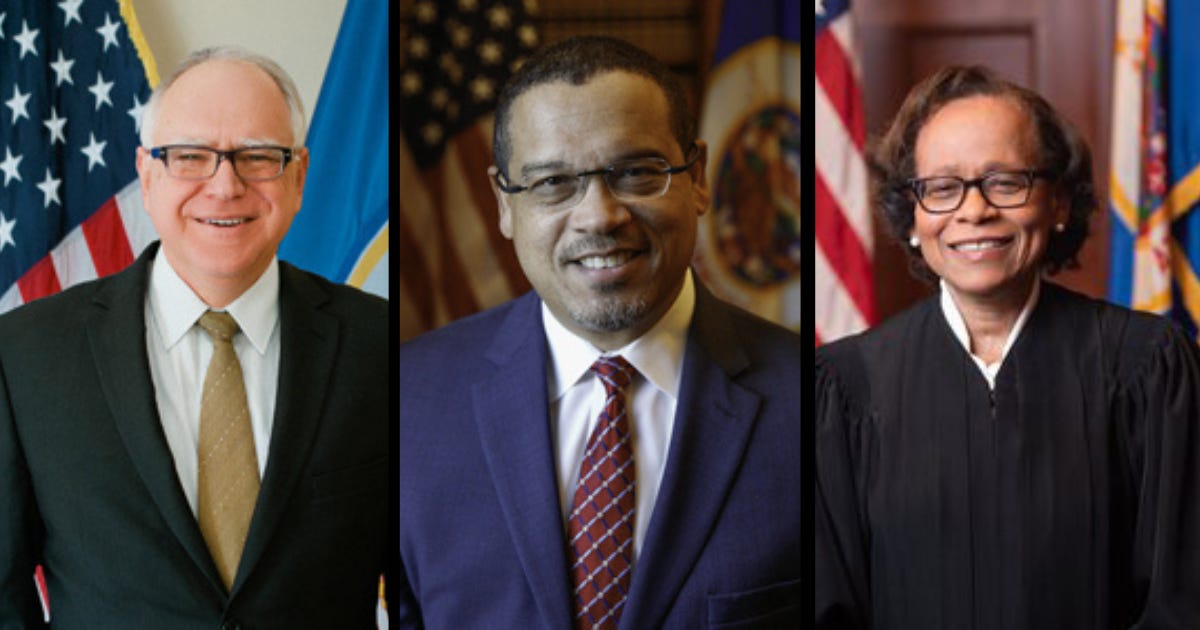
Minnesota is back in the national headlines after Tou Lue Vang, a 42-year-old Hmong man facing federal deportation, was pardoned by the Minnesota Pardon Board for the 2002 sexual assault of a 10-year-old girl.
The Minnesota Pardon Board consists of Gov. Tim Walz, Attorney General Keith Ellison and state Supreme Court Chief Justice Natalie Hudson.
The U.S. Department of Homeland Security quickly condemned the decision, calling the pardon “disgusting,” while Attorney General Ellison’s office told the New York Times the pardon followed an “exhaustive process” that included a statement of support from the victim and a “large number of community support letters.”
[ Read the NYT story for free at this gift article link]
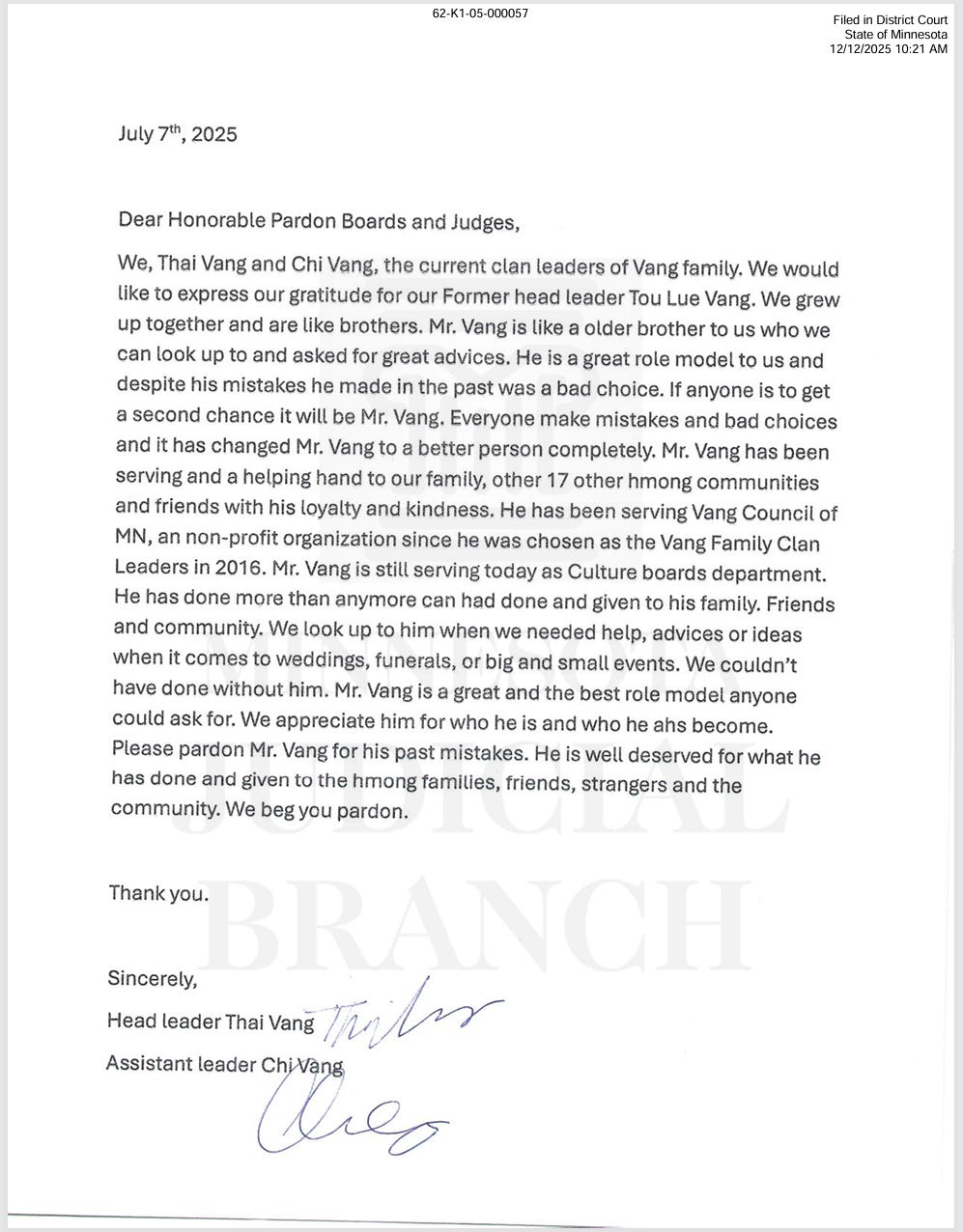
I turned to the public record to find out what the letters of support said, and who they were written by. The six letters included in his application were written exclusively by men, including Vang’s brother, uncle and male cultural leaders within the Hmong community.
(View the entire file, including the letters of support by clicking on this link).
A Life Full of “Barriers”
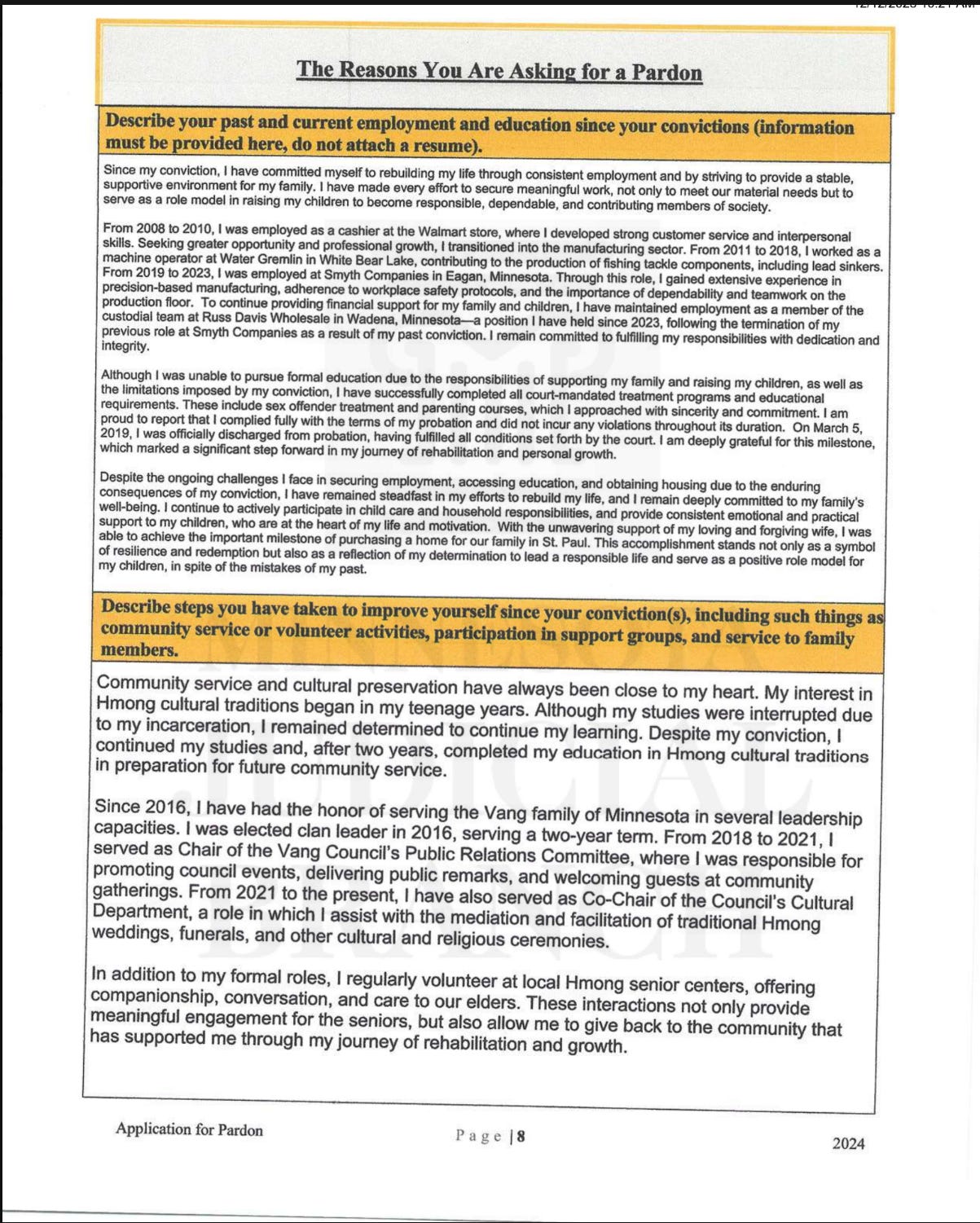
The pardon application includes questions Vang answered about why he was asking for a pardon, and how he’s improved himself.
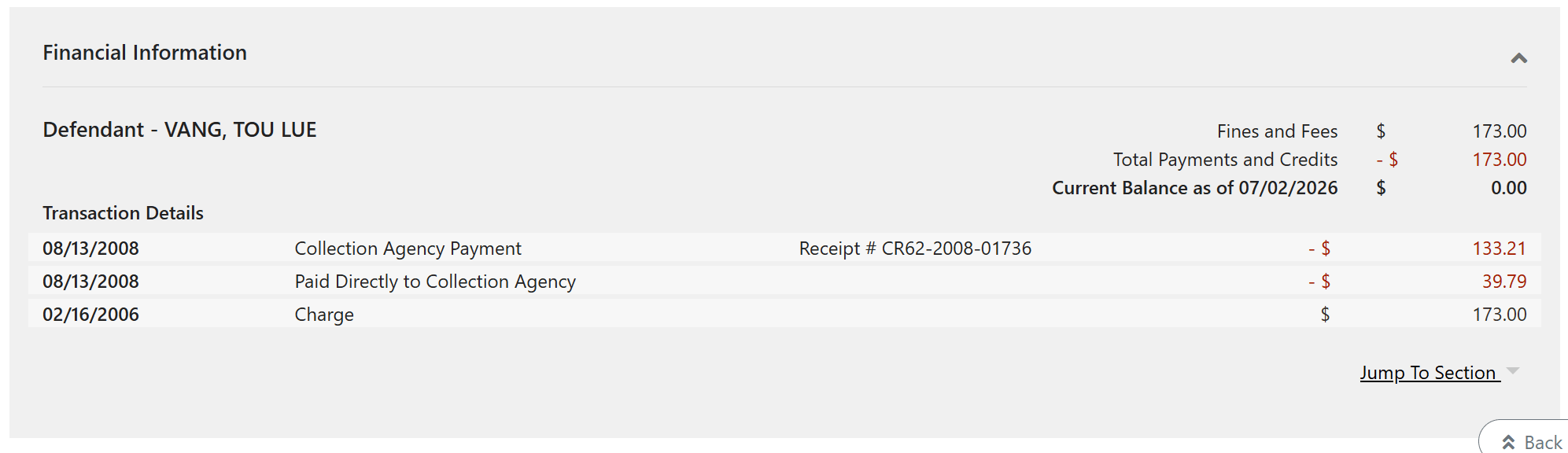
The application also outlines the specifics of his original sentence. For the 1st-Degree Criminal Sexual Conduct conviction, he was ordered to serve one year in a local county workhouse. Because of standard reductions for good behavior, he was released after serving eight months.
According to court records, he was issued a fine amounting to $173 including fees, which wasn’t paid until it was sent to collections years later.
In asking for a full pardon, Vang’s personal statement heavily emphasized the struggles he has faced. Some were systemic; he detailed the hardship of growing up without a father who was killed in a Thai refugee camp when he was only seven, forcing him into an early leadership role for his family.
However, Vang also leaned into the repercussions of his felony conviction for the sexual assault of a child.
He wrote that he has “faced barriers” to employment, housing and civil rights due to his record. He noted that he did not seek a pardon earlier because he didn’t know the process existed, adding: “Without the protection a pardon can provide, I face the very real risk of detention and deportation.”
Noticeably absent from his typed statement was any mention of his 10-year-old victim.
An Echo Chamber of Support
This omission of the victim’s barriers or recovery extended to the entirety of his application packet.
None of the six letters included in the public record addressed the impact of the crime on the victim.
Instead of addressing the specific nature of the crime, the letters of support focused on a narrative of redemption, characterizing the 1st-Degree sexual assault charge as a “bad choice” and arguing he is “deserving of a second chance.” His uncle went so far as to write that if Vang faces deportation for the offense, it would be “a grave miscarriage of justice—and a deeply human tragedy.”
The central argument across the letters was that Vang has transformed into a “role model” and an indispensable cultural leader. His supporters emphasized his current role as a mej koob, or traditional Hmong marriage broker, as proof of his high standing and rehabilitation within the community.
The statement submitted by the victim in this case is not included in his application.
According to reporting from the NYT, Vang’s victim submitted an unsigned statement to the board in support of granting the pardon. “What happened to me was wrong, but I have had many years to think about this,” she wrote. “I have made peace with it. I forgive him.”
Yet, the NYT article also explained the Ramsey County prosecutor who worked the case opposed the pardon as the victim in the case “was experiencing pressure from her family to not cooperate,” with the prosecutor’s office during the investigation, resulting in him receiving a more lenient sentence.
The “Mej Koob” and the Cultural Divide
The central claim of Vang’s rehabilitation, that he is now a vital community leader, contains a heavy focus on his role as a mej koob.
In Hmong culture, a mej koob serves as a highly respected mediator who represents the families during a wedding. A primary duty of the role involves negotiating the “bride price” or dowry: a financial exchange from the groom’s family to the bride’s parents.
Traditionally, this payment is meant to honor the bride’s family for their work in raising her and to act as a promise of security from the groom. Furthermore, if a wife seeks a divorce without culturally recognized grounds, the dowry may need to be returned to the husband’s family.
This specific tradition is currently the subject of a cultural debate.
Younger generations of Hmong-American women have increasingly pushed back against the practice, arguing that it commodifies women.
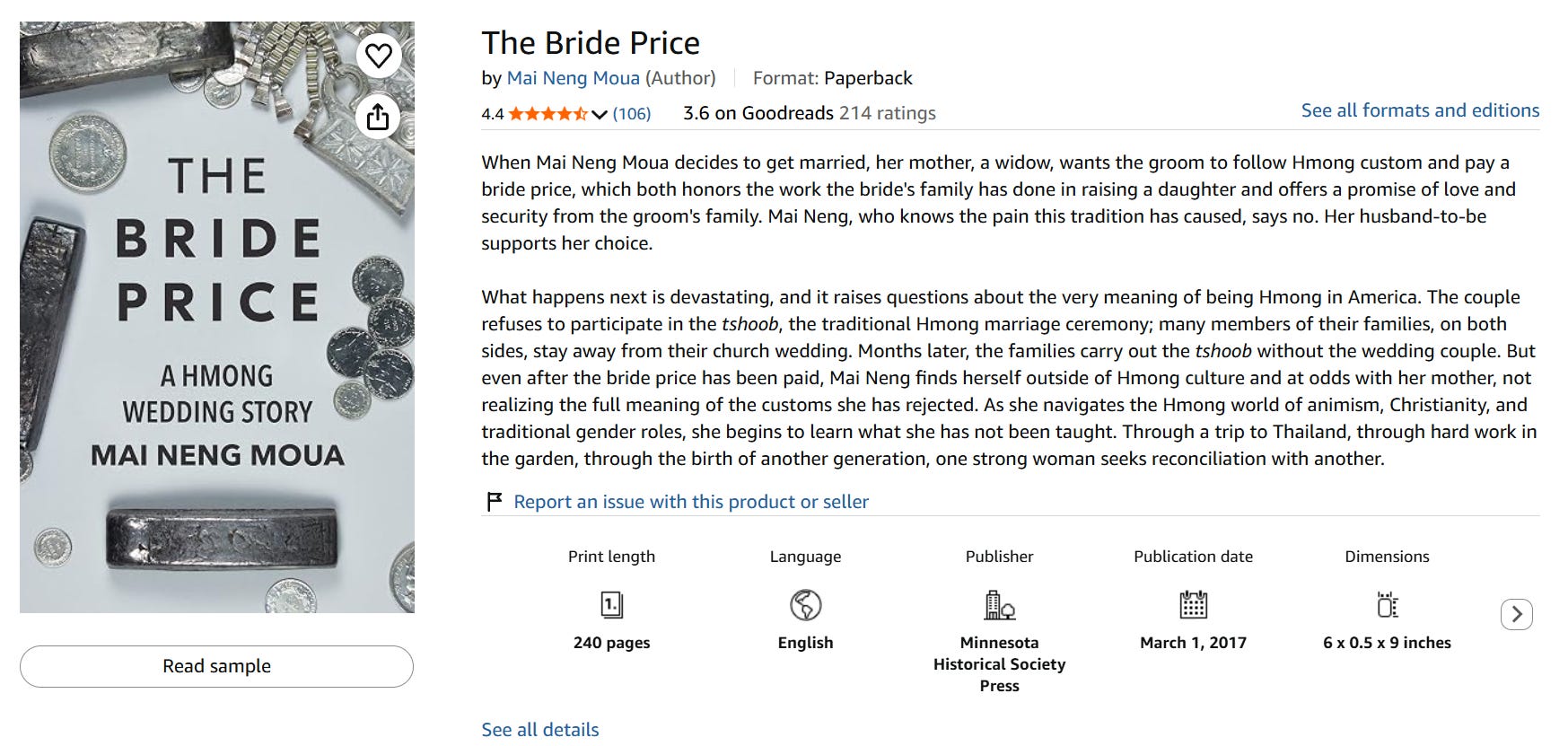
Minnesota author Mai Neng Moua captured this conflict in her 2017 memoir, The Bride Price, which detailed her own painful refusal to participate in the tradition and the familial fallout that followed. A core criticism raised by opponents of the practice is that the monetary value of a bride can fluctuate based on her “virtue,” physical health, and whether she has been previously married or is a virgin.
The men who wrote to the Board of Pardons championed Vang as a qualified authority to negotiate the value of young women transitioning into marriage and working as an arbitrator for domestic disputes.
Yet, none of those letters addressed how a man convicted of the sexual assault of a 10-year-old girl, an act that irrevocably altered the course of her life, could appropriately advocate for young brides.
The 9-Year Backlog vs. The Fast Track
When examining recent meetings and data from the Minnesota Clemency Review Commission, the story of Vang’s pardon shifts from a single controversial decision to a glaring disparity.
An internal video from the June 2026 Clemency Review Commission training session exposes a bureaucracy falling far behind in keeping up with requests.
Right now, over 150 people are sitting in prison cells facing years of delays on their clemency applications. Many seeking commutations are asking to be released early so they do not die in prison. The backlog is so severe that the commission is actively drafting policies to summarily deny some inmates without even granting them a hearing, just to clear the docket.
Yet, because Vang faced an imminent federal immigration deadline, his case was designated “time-sensitive” and fast-tracked in the line. While the commission privately discussed nine-year waits for many applicants, Vang’s application was filed, heard and granted a full pardon in less than a year.
The 2025 Pardon Data
The Commission’s 2025 Annual Report (read the full report here) details every case pardoned by the board last year. The data shows that the board pardoned only two sexual assault cases in the entirety of 2025:
A 3rd-Degree Criminal Sexual Conduct charge committed by an 18-year-old.
A 5th-Degree Criminal Sexual Conduct charge committed by a 42-year-old.
Absent from the entire 2025 list is a pardon for 1st-Degree Criminal Sexual Conduct, the most serious sexual offense.
Beyond a Pardon: The State-Mandated Erasure
While Vang’s primary stated reason for seeking clemency was to thwart his federal deportation, the pardon provided him with an even more powerful protection here in Minnesota.
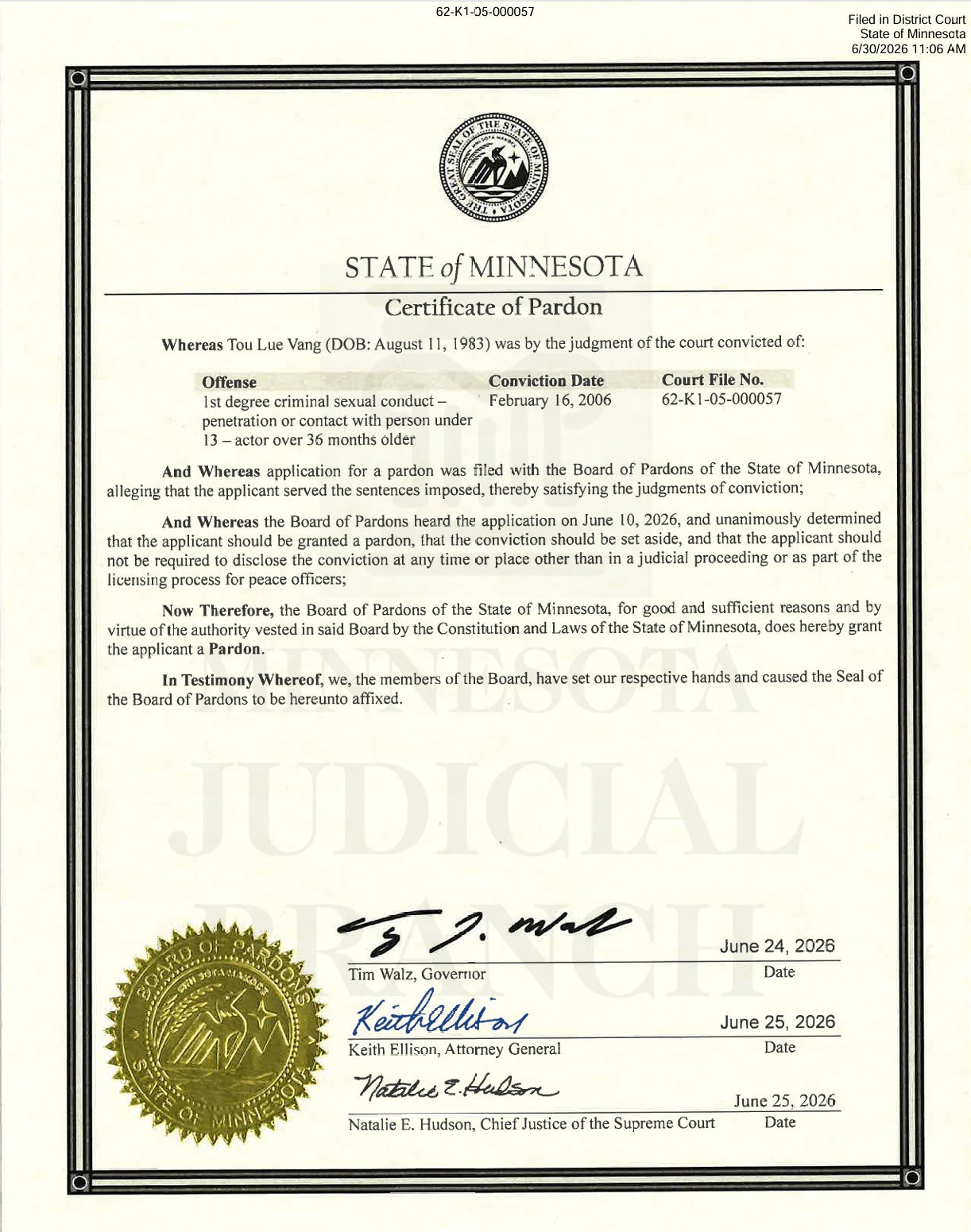
When the board granted the pardon, they didn't just forgive the crime; they ordered that he doesn’t have to disclose his past anywhere other than in a courtroom or in an application to be a sworn law enforcement officer.
Official court records obtained by The Watch detail the true scope of this action. On June 30, 2026, a judge issued an Order Setting Aside Conviction and Expunging Records. This order legally mandates that the Bureau of Criminal Apprehension (BCA) and the Ramsey County Sheriff seal Vang’s arrest, trial and conviction files. They can only share them under special circumstances.
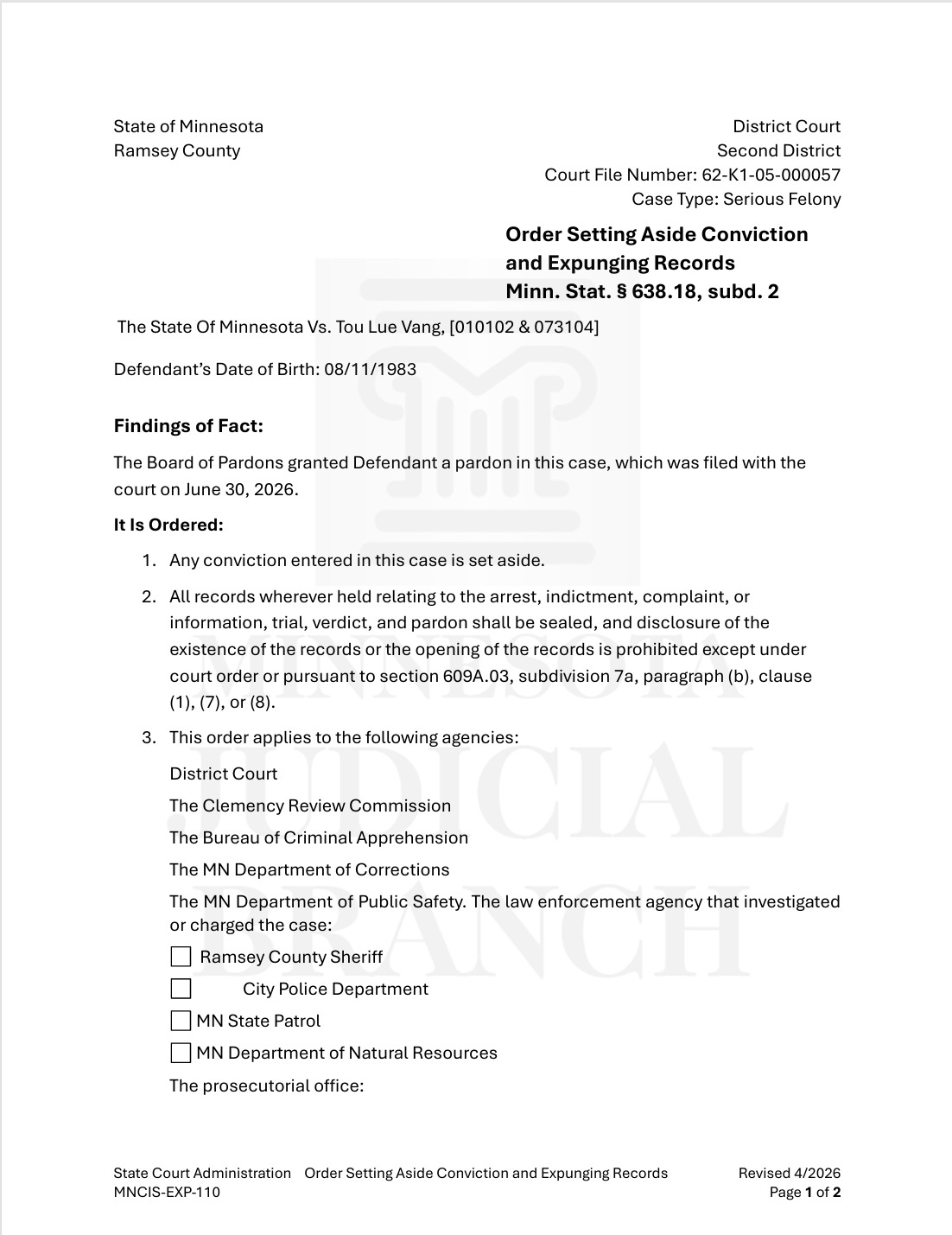
This means if anyone decides to run a background check on Vang for employment or housing, that check will come back without any mention of a conviction for sexually assaulting a child.
Great piece, and the only one I've come across so far they explains the mej koon phenomena.
Any chance you've come across the voting record for the Clemency Review Commission anywhere? It's not on their website and I thought it was interesting that there were three members noted as being absent, who could have swayed the vote away from recommending a pardon to begin with had they wanted to.
If the purpose of this article was to tell us how you feel, you've certainly done it succesfully but if you were trying to expose some new meaningful details or correct the record in some way, or present a new perspectice that asds to the conversation, you failed to do so. Not only that, you've added an unfair characterization that people who haven't looked into this case further, are going to be misled by, and that's not very fair. This entire subject is very sensitive and people tend to have very strong feelings about this type of case. I wonder if you stepped back and asked yourself why you felt compelled to share this viewpoint and what you are hoping to achieve. Had you made a decision about how you felt about this situation before you knew all the details? As you learned more about the case, did how you feel about things change at all? and lastly, do you think that the percentage your viewpoint in a fair way? Are there areas where you maybe used something to advantage your position in a way that wasn't fair or completely honest?