

Inside a Google Data Center Open House
I went for answers. They offered sugar cookies.

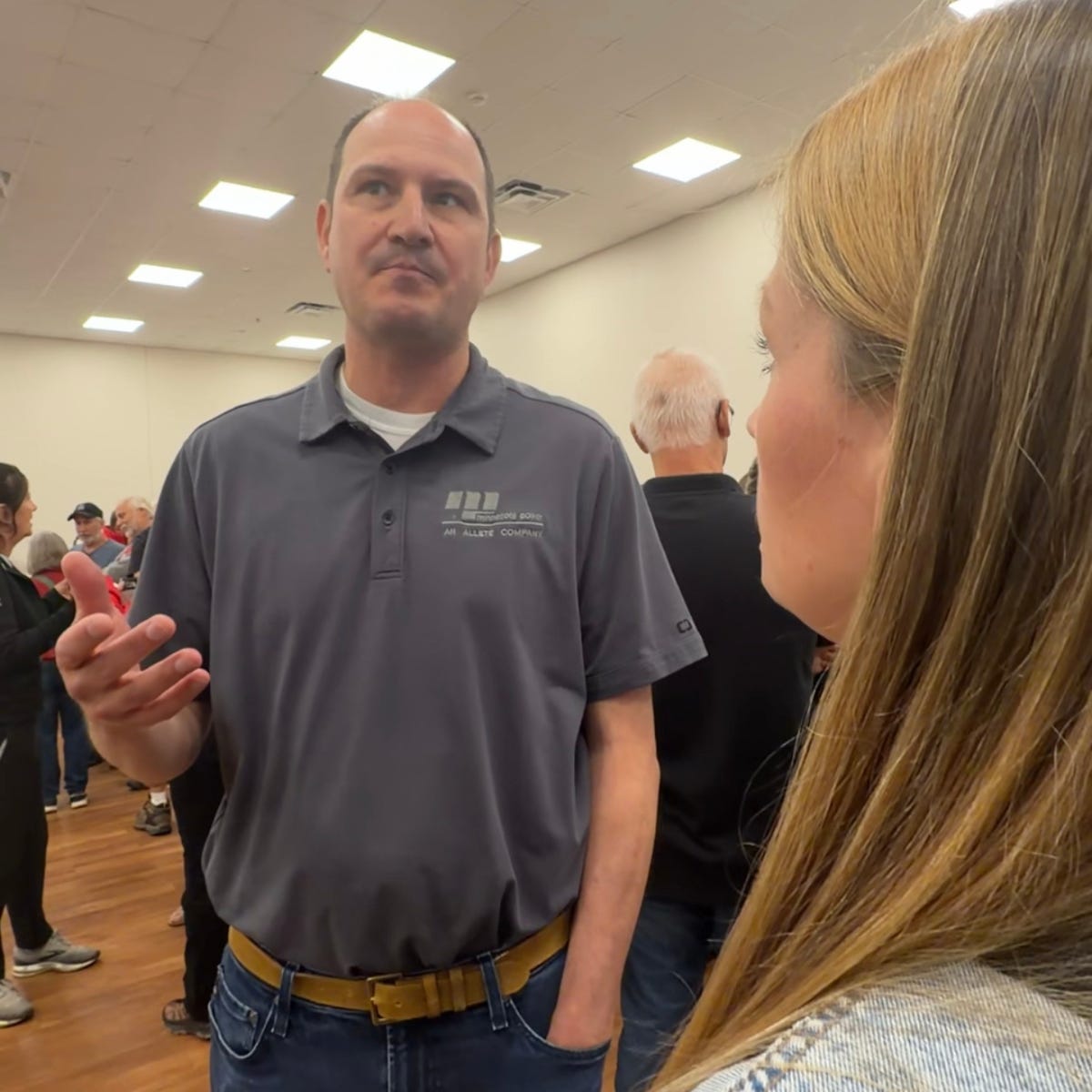
When Google announced an open house for its proposed $2 billion data center project in Hermantown, just miles outside of Duluth, I saw an opportunity to get some answers.
For more than six months, this community has grappled with the implications of non-disclosure agreements (NDAs) signed between local officials and the developer.
By shielding the initial planning stages from public view, those contracts transformed a quiet residential corridor into the flashpoint of public debate. What were once routine council meetings became standing-room-only forums, fueled by a community demanding transparency.
The open house event appeared to be a strategic effort to reset the developer's public posture.
The Pitch
Google’s proposal is significant. Under the terms discussed, the city would remove a tax burden for Google of up to $80 million in property taxes over 28 years, a deal with an estimated present value of $33.5 million.
In exchange, Google has proposed covering roughly $130 million in public infrastructure upgrades, including sewer and water extensions, alongside contributions to the local school district ($43 million) and city budget ($4.5 million).
Proponents, including groups like Jobs for Minnesotans, framed this as a “golden ticket” when speaking with the Duluth Tribune.
Yet, many community members are skeptical and don’t believe Google deserves tax breaks for the project. As reported by MPR, the Hermantown City Council recently voted unanimously to table the tax abatement vote, citing outstanding legal concerns, pending environmental reviews and ongoing litigation.
Not long after the council tabled the tax abatement vote, an invitation appeared on social media.
Google wanted to meet the community and answer questions. Provide transparency, and “light refreshments.”
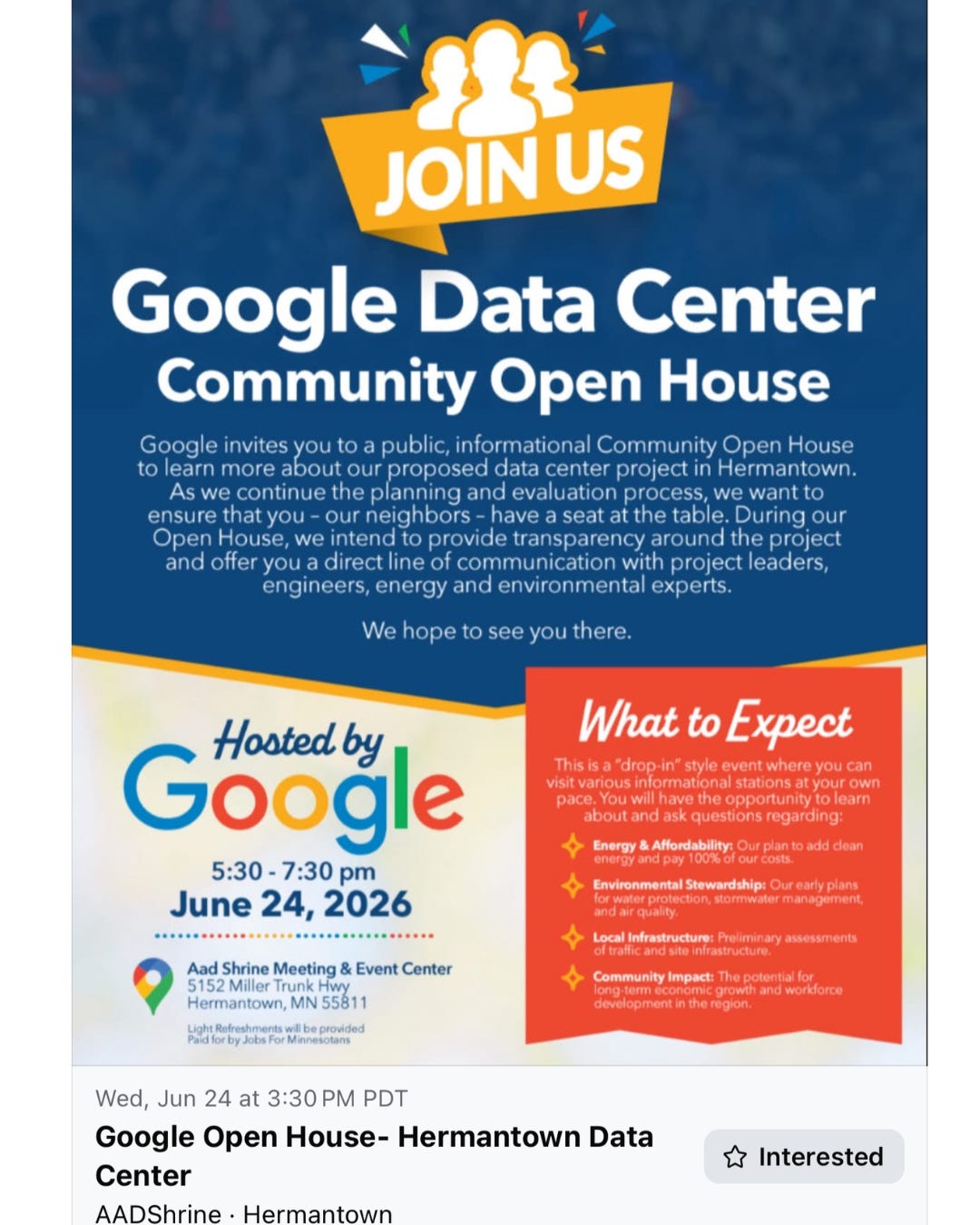
I attended as a member of the public to observe how the event was received, and ask several of my own questions.
My Bias
My perspective on this project is personal. I live 10 miles from the site; so, the development could impact property values, pre-existing homes and the environment in my community.
Yet, I have a professional history with Google. Years ago, a Google scholarship for military spouses helped me launch my career as a data journalist. I’ve seen firsthand how tech and this particular company can drive economic opportunity.
However, I was also trained in Google’s own data analytics curriculum, about the power of “open data,” that transparency is critical for governments.
It is a sharp contradiction to see the same company advocating for transparent data while simultaneously using non-disclosure agreements to limit public visibility into our local government’s decision-making.
I’m writing this as a neighbor who believes our community deserves the full picture. We should know all of the facts about whether this could be an economic goldmine, or a costly mistake.
Inside the Open House
The atmosphere was tightly curated. As the doors opened, those distributing opposition literature were directed away from the entrance to a designated “First Amendment” area in the back of the parking lot.
Police officers inside the doorway explained event security protocols required attendees to dispose of or put away all opposition literature before entering.
Eleanor Dolan, who was there in opposition of the data center, felt the event’s location on private property was a tactical choice, arguing that it allowed the developer to limit the scope of the dialogue compared to a public community forum.
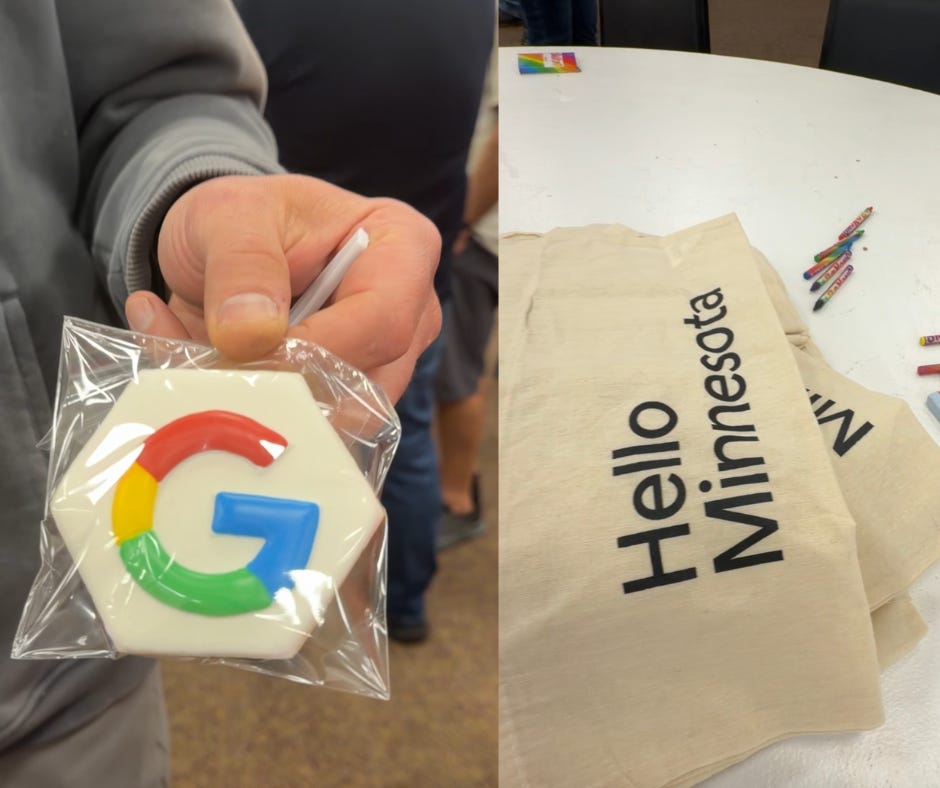
Once inside, “Hello Minnesota” tote bags were distributed, and sugar cookies stamped with the Google logo were arranged on the buffet. While representatives stood ready to discuss the project, Google’s own production team was active throughout the venue, filming interactions between the staff and attendees.
The disconnect between the hospitality and the community’s concerns, however, was immediate.
Residents pressed for specific data, tax liabilities, utility upgrades, and long-term risk mitigation, only to be met with a recurring refrain: “We don’t know.”
When citizens demanded concrete commitments, they were frequently directed to different stations or told that details remained subject to “future phases” of development.
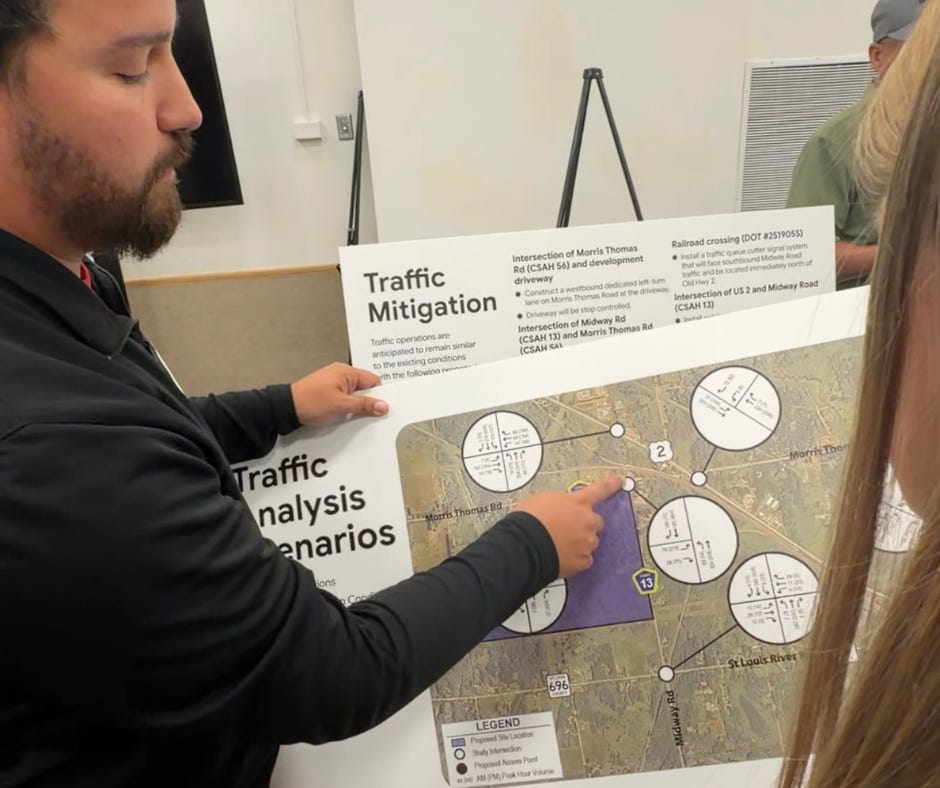
“I’ve talked to a number of folks tonight who have gone in, asked a question, been directed seven different ways, and left without an answer,” Dolan observed.
Yet, the experience was not universally negative.
Some attendees expressed appreciation for the developer’s presence, commenting in my social media community that Google was under no obligation to host the event and felt they got answers to the questions they asked.
What Does Local Leadership Say?
Hermantown Mayor Wayne Boucher was present at the event, though he remained on the sidelines. While public records confirm he was briefed on the project’s development well before the general public, he functioned as an observer rather than a facilitator at this open house.
Given that the mayor’s office has never agreed to an official interview with The Watch, I took the opportunity to approach him in person.
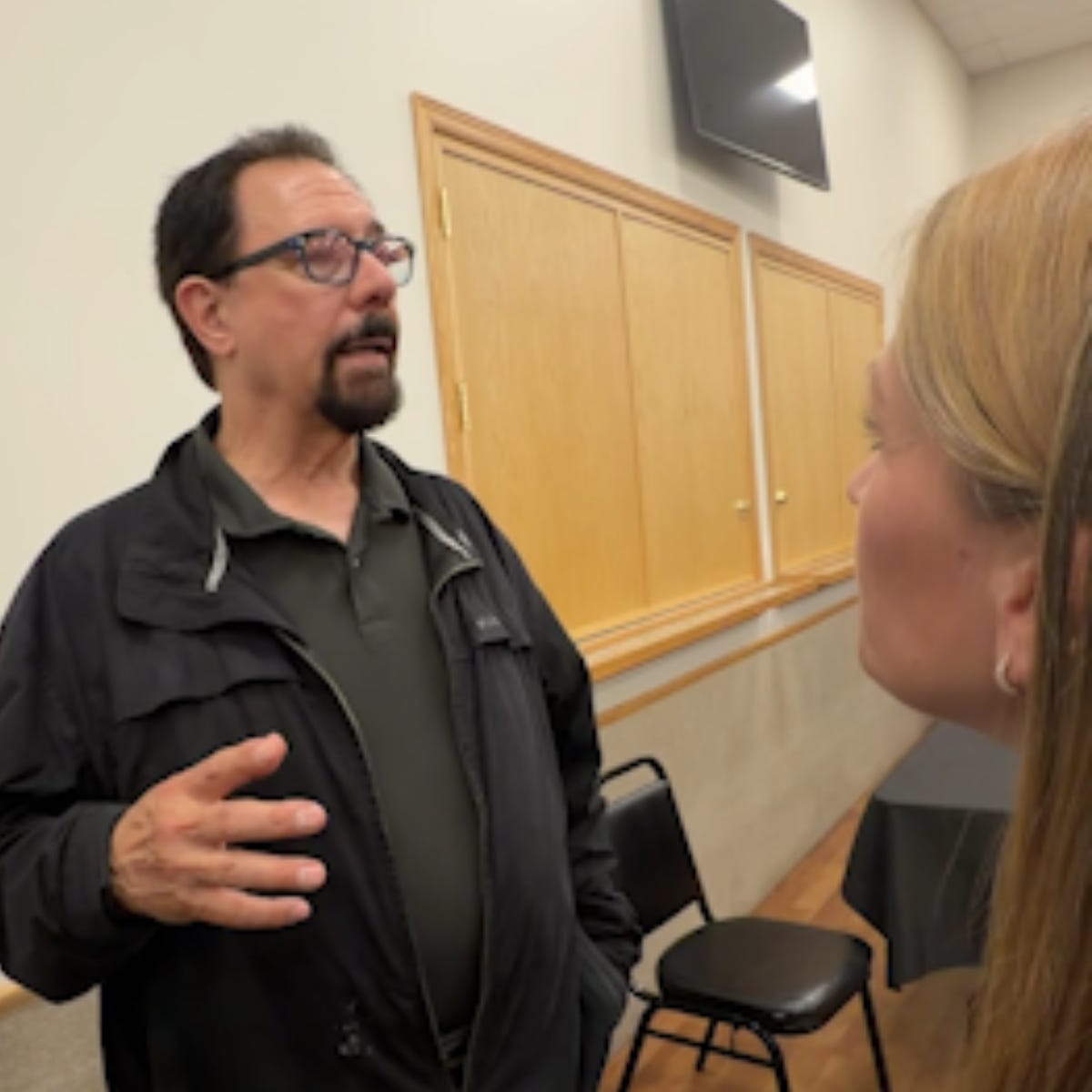
Nikki: Can I ask you a couple questions?
Mayor: Short ones, maybe.
Nikki: How do you think the meeting is going?
Mayor: It’s hard to tell. People are learning things and seeing things that they didn’t know. I’m here to see the same thing. The city didn’t put this on, Google is. I’m glad they are. There are questions that I hope they’ll answer to people that people need answers to.
Nikki: What are you hoping comes from this?
Mayor: Through the whole process there’s been some misinformation. I’m hoping that people can get the real facts. But this shouldn’t just be a one-time thing. This needs to continue.
Nikki: What do you think has been the worst misinformation?
Mayor: It’s going to use too much water.
Nikki: Anything else?
Mayor: There’s other things that are variable and subject to change but what the problem is it isn’t all done yet. These people are the ones who can do that.
Nikki: Do you think it would have been ideal to have this event earlier in the process?
Mayor: Oh, definitely.
Nikki: What kept that from happening?
Mayor: I don’t know.
Nikki: You don’t have any information from the developer about why this couldn’t happen earlier?
Mayor: Well, they’re doing it now because they chose when to do it.
Nikki: Anything else you want to say that you just want to put out there?
Mayor: There are a lot of people here that are asking good questions. A lot of people are being respectful, a couple that aren’t, and they’re entitled to their opinions.
What’s Next?
I also spoke with a Google representative who requested that our conversation remain off camera. When asked how the company would ensure the projected 100 jobs benefit the local community, the rep pointed to ongoing partnerships with local schools to develop workforce pipelines.
Regarding the restrictive NDAs that characterized the project’s early planning, she noted that she was a recent addition to the team and expressed a personal hope for greater transparency, though the rep could not provide a specific timeline or mechanism for that change.
Google has committed to a follow-up event in August. The Watch will continue to track the project.
What gets me is the NDAs that occur long before any of this happened. I don't like the fact that you have the city councils going into these when it may not be in the best interest of the town as a whole. And then it's too late. It seems to happen a lot.